WORDS THAT WORK WITHOUT SOUND
Send a song they can appreciate before pressing play
If someone cannot listen right now, put the reason for your dedication in the message itself. Name the moment or feeling you want to share, and leave listening optional. On this site, the note is readable before the recipient loads the music player.
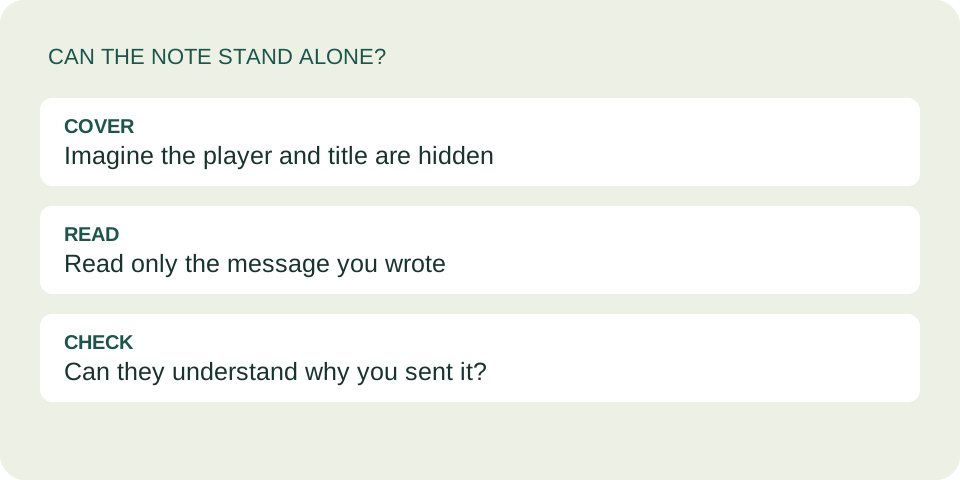
Try the covered-player test
Before sending, imagine the music title and player are covered. Read only your note. Can the recipient tell why you thought of them? If the answer depends on recognizing a lyric, solving a reference or hearing a particular section, add the missing meaning in your own words.
This is a writing exercise, not a test of the recipient. They might be commuting, working or simply prefer to read first. You do not need to guess the reason. A message can stand on its own while the song remains something extra to enjoy later.
What would I want this person to understand even if they never played the song?
Find the missing sentence
The examples below are invented editing exercises, not real messages or song lyrics. They show different kinds of missing information. Use only details that are true for you.
The note gives instructions, but no meaning
Draft: “Play this when you get home. You'll understand.”
What is missing: The recipient has to listen before learning why you sent it.
Revision: “I was thinking about our late-night kitchen conversations. This song has that same unhurried feeling. I wanted to say I miss those evenings; listen whenever it suits you.”
The note points to a hidden answer
Draft: “The part at 1:20 says everything.”
What is missing: Your own intention. Even after listening, the person might choose a different interpretation.
Revision: “I have found it difficult to say how much your patience mattered last week. That is what I want this dedication to carry. The music is an extra way of sharing the feeling.”
Neither revision transcribes or explains the recording. Both supply the sender's meaning. If a particular lyric matters to you, explain your response to it in original words rather than copying it or treating it as a message the recipient must decode.
Build a small text companion
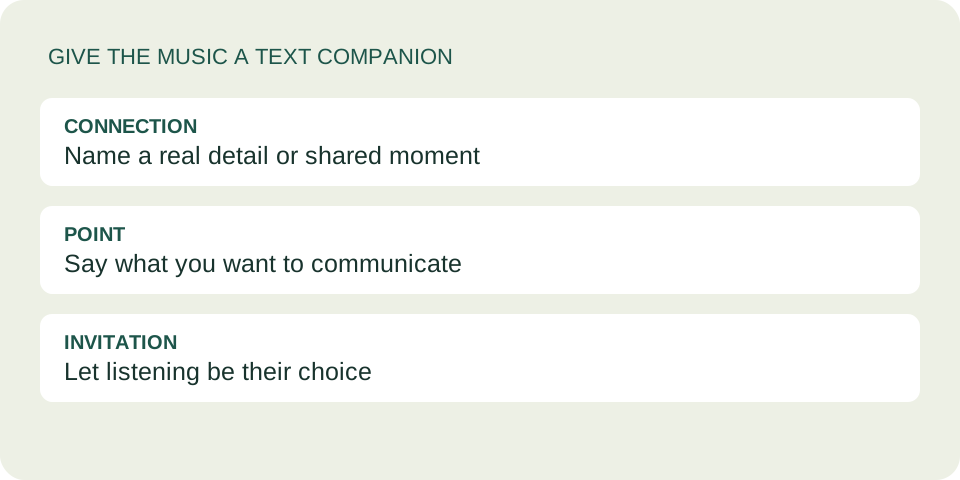
Write three short parts: the connection, the point and the invitation. These are prompts for editing, not required fields in the card.
- Connection: Name the real memory, detail or mood that made you choose the music.
- Point: State what you want to communicate now. Do not leave this inside the song.
- Invitation: Offer listening without a deadline, proof request or expectation of a particular reaction.
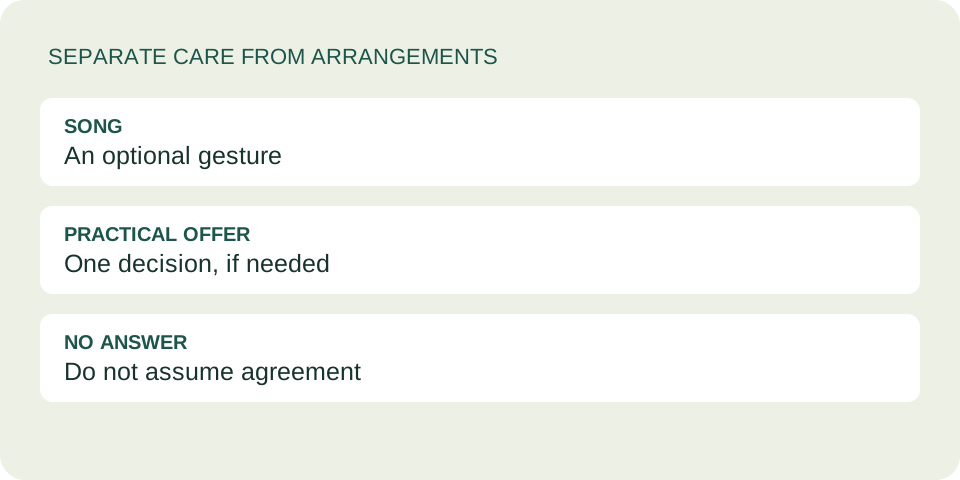
You can leave out the invitation if it makes the note sound unnatural. A short, complete message is better than adding a ritual closing. For a fuller writing exercise focused on a specific act of kindness, see the thank-you revision guide.
Check the actual card before listening
Create your card and open its dedication page. Leave “Load music player” untouched while you review the note. Check that your reason is visible and understandable without opening the provider. Then check the music separately so the text does not become a substitute for fixing a wrong link.
The note and player have separate jobs: the note carries your intention; the player offers access to the selected music. This does not guarantee playback, captions or a transcript on the music service. If audio fails unexpectedly, use the playback troubleshooting guide.
Questions about reading first
Does the recipient need to play the music to see the note?
No. The dedication page displays the note before the music player is loaded. The recipient can read first and choose whether to open the music.
Should I include a transcript of the song?
This exercise does not need one. Write your own reason for choosing it. Your dedication is not a transcript or a replacement for accessible features provided by the music service.
Should I ask whether they listened?
You can let the invitation stand without checking. A reply about your words can be meaningful even if they have not played the recording.
Can I send just the note instead?
Yes. If a card is inconvenient, send your own words in the conversation you already use and offer the music link separately. See card links and plain-text sharing for the difference.
Check for hidden requests