CARE WITHOUT AN UPDATE REQUEST
Send a supportive song without asking for an update
Say what you want to offer, leave the music optional, and remove questions that ask the recipient to explain their situation or reassure you. If arranging practical help needs an answer, separate that small decision from the song. Do not treat silence as permission to visit, call or send more cards.
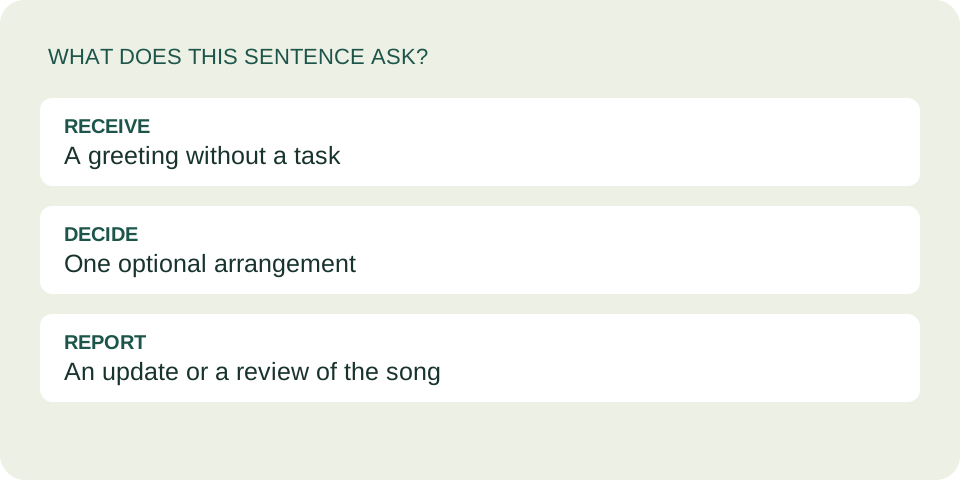
Mark each sentence by the job it gives the reader
A note can sound caring while still creating work. Before choosing a card, put each sentence into one of these groups. This is an editing exercise, not a prediction of how someone will feel.
Receive
A statement they can read without doing anything: you remembered a shared moment or wanted to say hello.
Decide
A specific optional arrangement: whether they want you to return a borrowed item on a particular day.
Report
A request to describe what happened, how they feel, whether they listened, or whether your gesture helped.
Keep the first group simple. Make the second group clear and easy to decline. Remove the third group when your purpose is to offer company without asking for an update. A sentence ending with a full stop can still contain a request, such as “I need to know you are doing better.”
A fictional editing exercise
Imagine a friend has said they are busy with a difficult week, without explaining further. You already have a normal, welcome way to contact them. These invented drafts are not messages from readers.
“I picked this for you. Please tell me what has been happening, and let me know if the song cheers you up. No reply needed.”
The closing contradicts the two requests before it. Delete the request for private details and the demand to evaluate the song. Do not replace them with an assumption about what the friend is experiencing.
“The little instrumental we used to play while sorting postcards came to mind today. I wanted to send a hello with it. The music can wait, and you do not need to tell me how your week is going.”
Replace the invented memory with something true, or omit it. The useful change is structural: the reader no longer has to provide a personal report or judge whether your music choice worked. There is no claim that the song will improve their mood.
Keep a practical offer separate
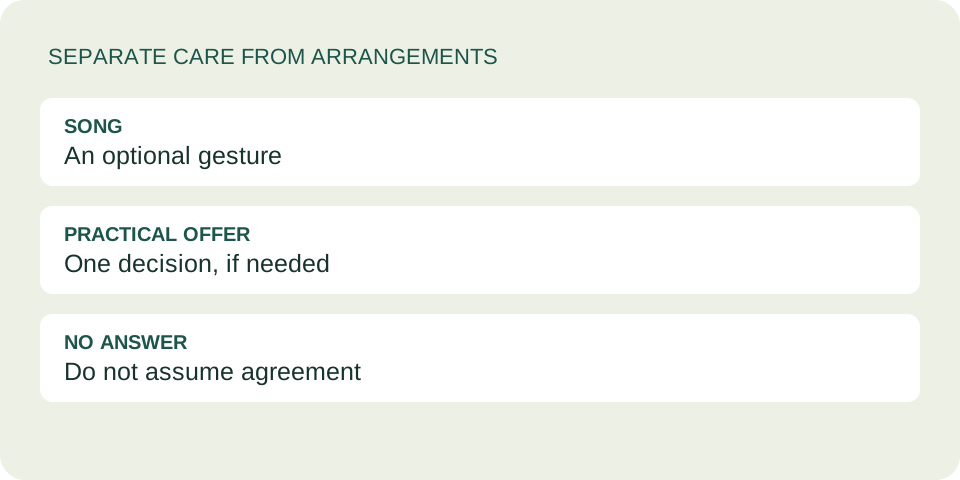
Sometimes an offer genuinely needs a response. Do not hide that fact behind “no reply needed.” Put the arrangement in its own short message, with a clear default if the person does not answer.
“I can return your borrowed stand on Saturday afternoon if that suits you. If I do not hear back, I will keep it here and we can arrange another time.”
This fictional example asks for one decision, not a description of the person's circumstances. The default is no visit. Only offer something you can actually do, and do not take a quiet inbox as agreement. If no practical arrangement is needed, leave it out rather than adding a task to make the note seem more useful.
Review the whole card, then stop
- Check whether contact is welcome. A different account or anonymous card does not override a request for space.
- Read your note without playing the music. Look for requests to explain, reassure, listen by a deadline or report a reaction.
- Inspect the finished greeting and signature too. A warm card may not fit every relationship; ordinary text is another option.
- Keep private details out. Anyone with the complete dedication link can read it.
- Open the copied card link before sending. Creation is not delivery, and this tool does not tell you whether someone read or enjoyed it.
After sending, let the message stand. Lack of a reply does not explain their feelings or invite a sequence of follow-ups. Music is an optional gesture, not proof that you have solved someone else's situation.
Questions while revising
Can I ask whether they liked the song?
That is a request for feedback. For this kind of note, leave it out and let the recipient choose whether to mention the music.
Should every note say “no reply needed”?
No. Removing the actual demands matters more than adding a formula. If a separate arrangement needs an answer, say so clearly.
What if I do not know what happened?
You can say hello without naming a cause or asking for details. Do not build the card around a guessed explanation.
What if a card feels too much?
Use a short message in your existing conversation, or wait if contact is unwelcome. You do not need a dedication to make every gesture count.