A WRITING EXERCISE
Send a song with a specific thank-you
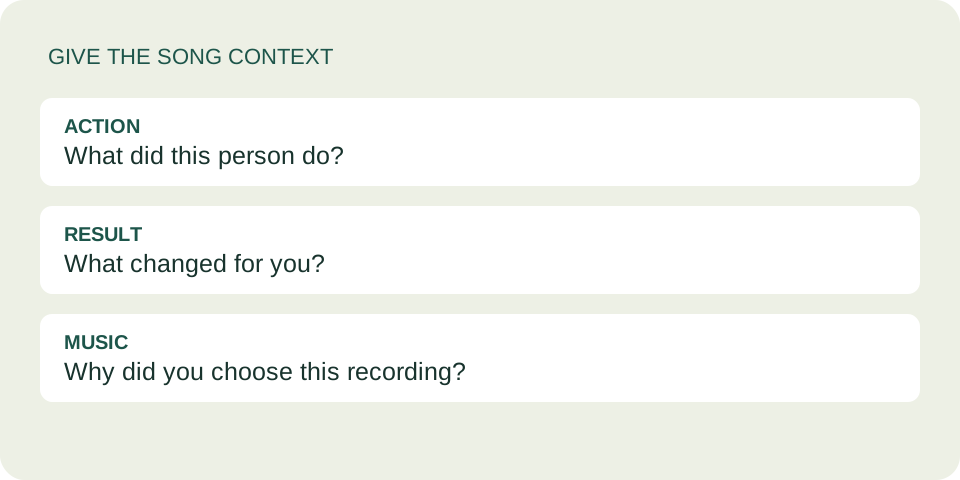
Start with one thing the person actually did. Say what changed for you, then explain your music choice in your own words. If the note could go to anyone unchanged, replace one general compliment with a real detail.
Write your dedication →Try this editing exercise
All situations and messages below are invented examples. Use the editing process, but replace the events with something that really happened to you. None of the sample wording is a song lyric.
Starting draft
“You are the best. Here is a song for you.”
This gives praise, but the recipient cannot tell which moment you have in mind.
Revision
“You stayed after rehearsal to help me pack the equipment. I got home before the rain because of you. I picked this lively track to celebrate getting through that evening together.”
The revision gives the music a purpose without expecting the song to explain the whole story.
Now cover the recipient's name. Could the revision still be sent unchanged to ten different people? If so, identify the detail that belongs to this relationship. Specific does not mean long: one recognizable action is enough.
Make it shorter without losing the meaning
A long first draft can help you find what matters. The version you send can be much smaller. Here is a second invented exercise:
First draft: “I was worried about learning the bus route, and you explained which stop to use, and you came along the first morning, and I really wanted to find a way of saying how much that helped.”
Edited note: “Thanks for riding the new route with me that first morning. The trip feels manageable now. This gentle song is a small thank-you for your patience.”
The shorter version keeps the event and its effect. It removes the explanation of why you are writing, because the thank-you already makes that clear. Read your draft aloud and remove a sentence if it repeats something the recipient has just learned.
What if the song choice needs explaining?
Choose an explanation you can stand behind. You might associate the rhythm with an energetic afternoon, remember hearing the recording together, or know that the recipient enjoys that artist. Those are different reasons; use the one that is true.
Do not invent a shared memory to make the card more emotional. If there is no special story behind the track, a simple “I thought you might enjoy this” is clearer than claiming it represents your entire friendship.
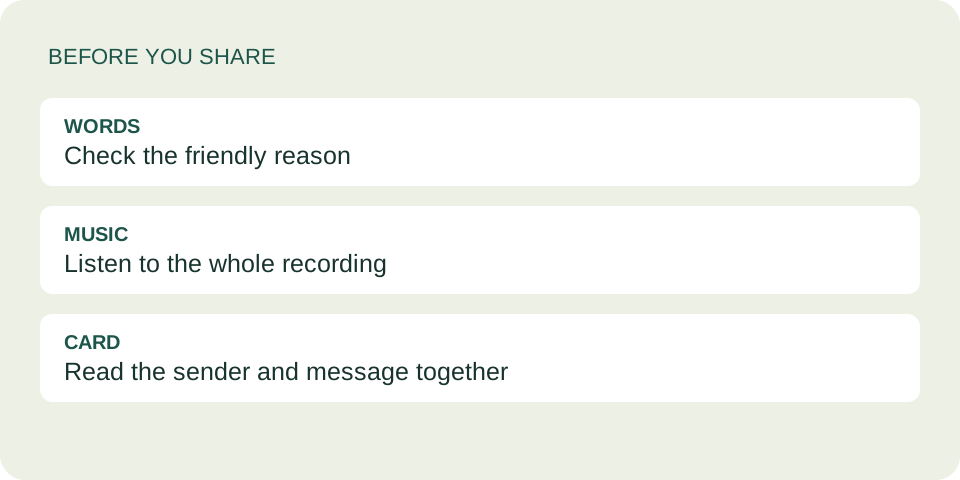
Before sending, listen to the selection yourself and decide whether its overall meaning fits your relationship. Your note can clarify your intention, but it cannot control how another person interprets a song.
Turn the finished note into a card
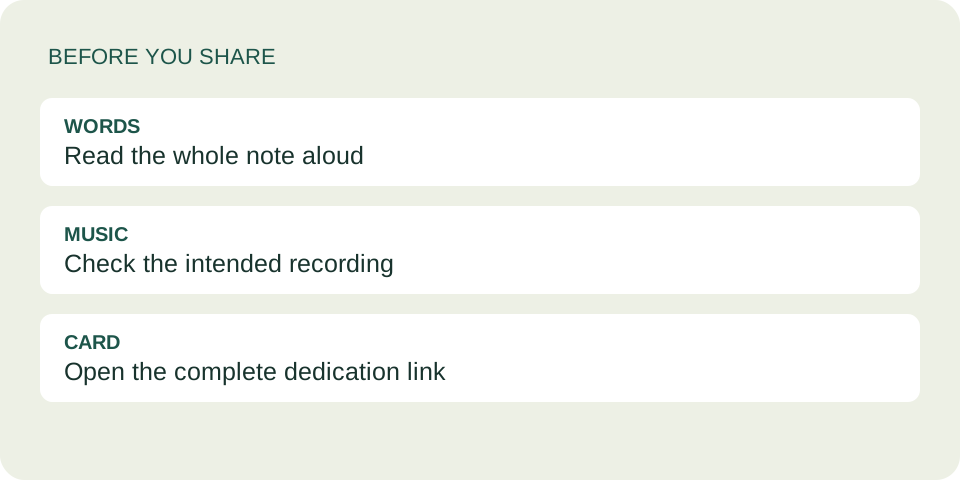
- Keep the edited note somewhere you can copy it.
- Choose the intended recording in the tool or use a supported Spotify link.
- Add the recipient, message and your signature if you want the source of the thanks to be clear.
- Create the card and read the result before copying the dedication link.
If you discover an error later, a new card creates a new link; it does not update the old version. See the correction guide.
Questions while writing
Can the message be only one sentence?
Yes. “Thanks for lending me your spare umbrella; this song is a little bit of sunshine back” is a complete invented example. Use it only if that situation matches your experience.
Must the song have thank you in its title?
No. Explain why you chose it rather than depending on the title to carry your meaning.
What if I cannot describe the music?
Describe your reason for sharing it. You do not need musical terminology or a claim about what the composer intended.
Should I ask whether they liked it?
You can leave the gesture complete on its own. A request for a reaction may distract from the appreciation you wanted to express.
Check the complete gesture
For a friendly gesture, try the song and message alignment exercise.
Saying goodbye to a colleague?
Celebrate without assigning the next goal