CHOOSE FOR A LISTENER
Send a song to someone with different music taste
Start with something the person has actually told you they enjoy, then choose one recording with a connection you can explain. If you are sharing your own favorite instead, say so. You can offer a discovery without claiming it will become their favorite or asking them to change their taste.
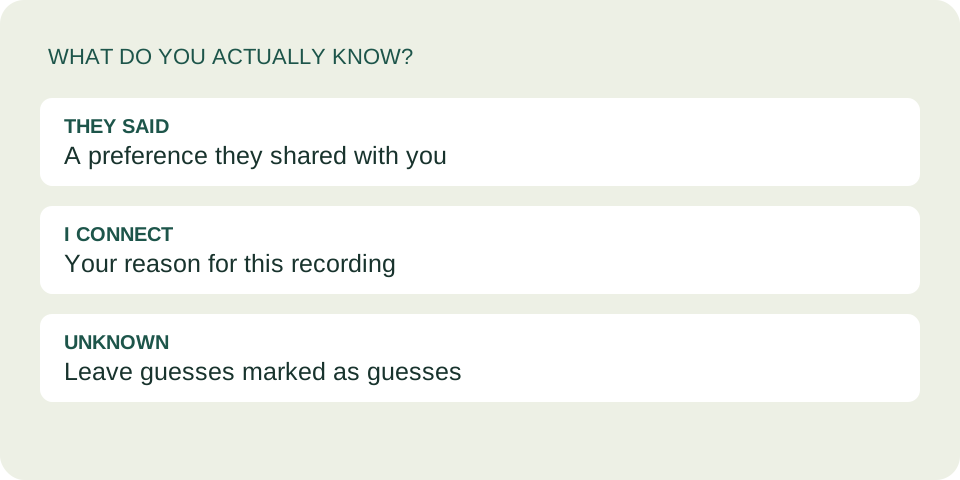
Make a three-column shortlist
Before searching, write down what you know, what the music means to you, and what you still do not know. This worksheet is an editorial exercise, not a recommendation engine. Leave an unknown blank rather than filling it with a confident guess.
They said
Record a specific preference they shared: an artist they mentioned, a recording they played, or a sound they said they enjoy. Keep the context. Liking one quiet track does not prove they dislike every energetic one.
I connect
Name your own reason: a moment, an instrument, a rhythm or a personal memory. This can make a dedication meaningful even when your libraries barely overlap.
I do not know
Mark unconfirmed details, such as whether they know the artist, like this version, or want a recommendation today. Do not turn these into statements about them.
Try the worksheet on a fictional choice
Imagine a friend said they enjoyed the piano recording played during a weekend breakfast. You usually listen to electronic music. You have two possible dedications: that familiar piano recording, and a new electronic track whose opening reminded you of the same morning. No real track or reader is being described here.
For a reminder of the breakfast, the familiar recording needs less explanation. Your note could say: “This brought back the breakfast where we kept talking long after the coffee was gone. I enjoyed that morning with you.”
For a discovery, be explicit that the second choice comes from you: “I found this today. The opening made me think of that slow breakfast, even though it sounds different from what we played. Sharing the association, not assigning you a new favorite.”
Neither choice proves what your friend will enjoy. The important decision is whether you are recalling something shared or offering something new. Do not describe an unfamiliar recording as “our song” merely because it reminds you of the person.
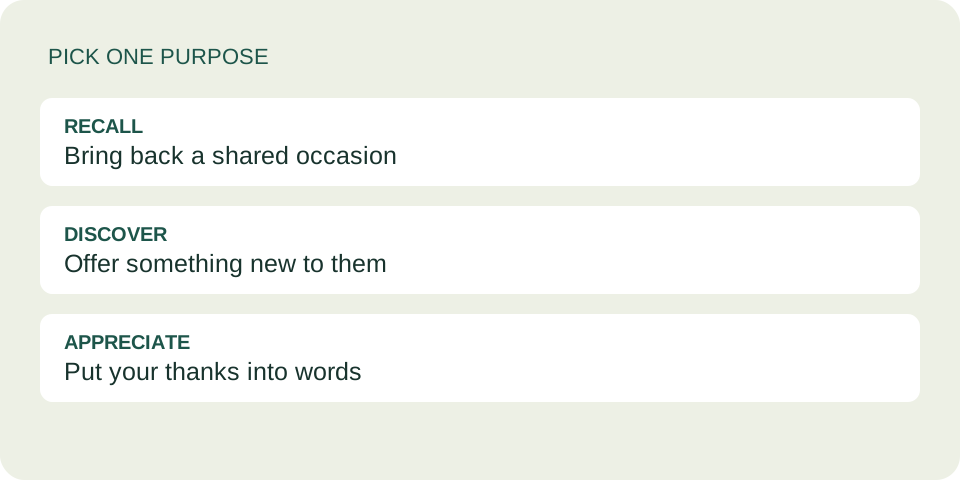
Choose one purpose before one song
- Recall: use the recording connected to a real shared occasion, and name the memory accurately.
- Discover: explain what caught your attention. Leave room for a different reaction.
- Appreciate: put your thanks or admiration in the note so the recipient does not have to enjoy the genre to understand it.
If your draft tries to do all three, keep the most useful purpose. A dedication is not a test of musical compatibility. You can care about someone and disagree about a recording.
Move from the shortlist to the card
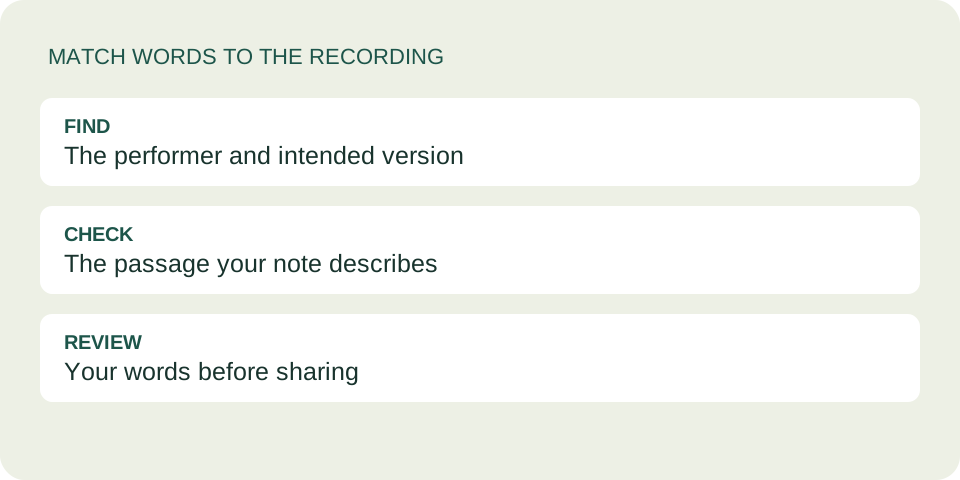
- Find the intended recording, checking the performer and version. A similar title is not enough; see the recording search guide.
- Review the actual recording through its music service when available. Search results and a card preview do not predict someone's preferences or guarantee playback.
- Put your one-sentence reason in the message. Avoid “you will love this” when all you know is that you like it.
- Create the card and read the recipient name, message and signature together. The tool presents the recording and your words; it does not evaluate the listener's taste.
- Copy the complete dedication link and reopen it to check the card. Share it through a welcome channel, without requiring an immediate review.
If you use different services, that is a separate question from different tastes. The cross-service guide helps you check the recording on another service; switching services does not tell you whether the person likes it.
Questions before you send
What if I know nothing about their music taste?
Ask a small, ordinary question such as what they have been listening to lately, if the conversation welcomes it. Otherwise introduce your choice as something you wanted to share, not something chosen from knowledge you do not have.
Should I send several tracks so one is bound to work?
There is no guarantee that more choices help. For one dedication, keep one recording and a clear reason. A requested playlist is a different kind of exchange.
Can the note make an unwanted song welcome?
A note can clarify your intention, but it cannot determine the other person's reaction. Do not argue with their preference or keep sending alternatives after they decline.
What if they say they do not like it?
Accept the answer without defending your taste. You can keep the shared memory or appreciation separate from the recording. A negative reaction to one song is not evidence about the whole relationship.
When your choice has no lyrics