A MOMENT TO FINISH
Send a song to celebrate a finished creative project
Congratulate the person on the stage they have actually completed, add one detail you genuinely noticed, and explain why you chose the music. Keep predictions, requests for the next project and unreleased details out of the card. Finishing a draft can be worth celebrating before there is a launch, audience or award.
Use the right verb for the milestone
A project can be drafted, submitted, approved, released or sold. Those are different events. Use the person's own description of what is finished instead of upgrading it into a bigger announcement.
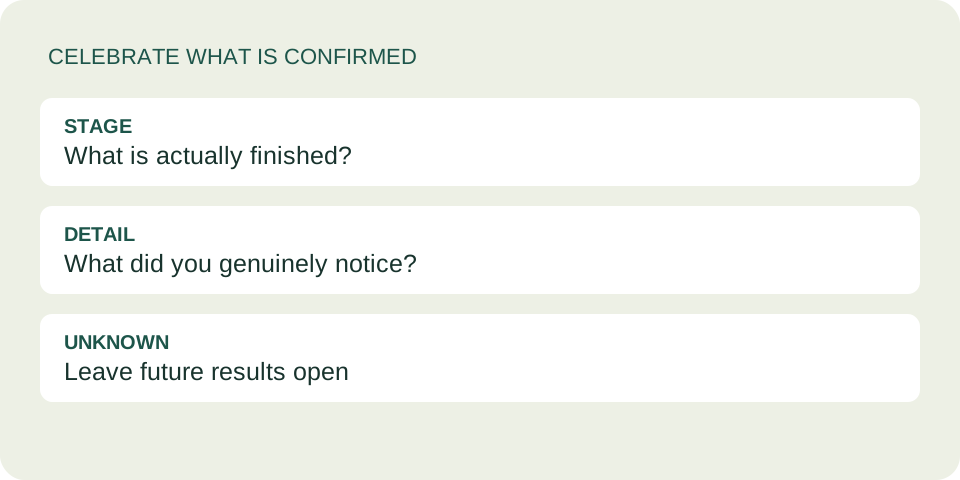
What happened?
Write the confirmed stage in a few words: the model is assembled, the final illustration is delivered, or the first draft is complete.
What did I notice?
Choose one thing you actually saw or were told about. Do not invent late nights, sacrifices or setbacks to make the note sound more moving.
What is still unknown?
Leave sales, reviews, selection results and future plans out unless the person has already confirmed them. A celebration does not need a forecast.
A fictional model-making example
Imagine a friend has finished assembling a handmade model and privately shown you a photograph. You remember them demonstrating how its little door opens. They have not said whether they will exhibit it or sell it.
“Your exhibition will be a hit. You should start a shop next! Here is your victory anthem.”
This draft invents an exhibition, predicts its reception and assigns more work. None of those things is necessary to congratulate someone on a completed model.
Try a note that stays with what you know:
“The model is together! I keep thinking about the tiny door you showed me and how neatly it moves. This playful track made me think of that detail. A small celebration of getting to this point.”
The example is invented, including the musical description; replace each detail with something true. Notice that the note can remain warm without claiming the project is perfect, promising an audience, or telling the maker what to do tomorrow.
Separate the celebration from the announcement
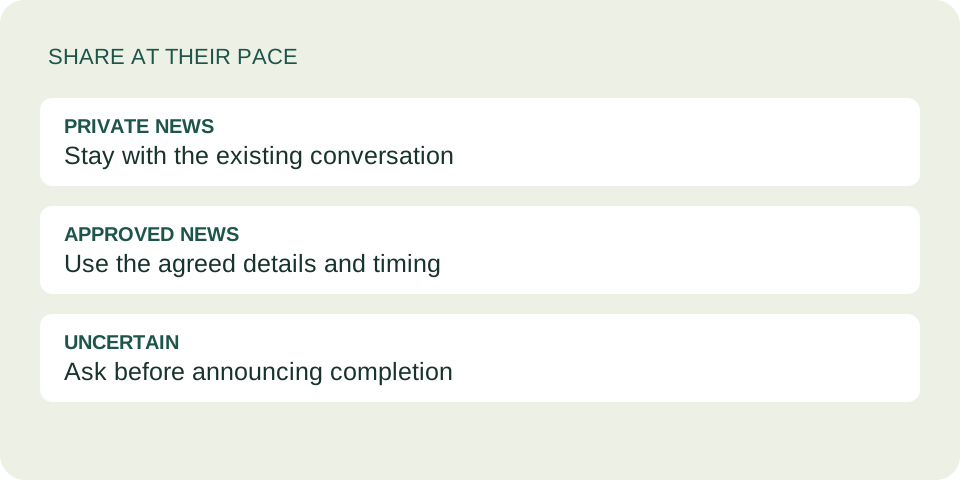
- They told only you: congratulate them in that existing conversation. Omit project titles, images and details they have not cleared for wider sharing.
- They invited a public celebration: use only the details and timing they approved. A request to celebrate is not blanket permission to publish private drafts or photographs.
- You are unsure whether it is finished: ask about the stage before making the card. “How did the last assembly step go?” is different from announcing a completion.
A dedication link is not a private vault. Anyone who receives the complete link can read the note, and a recipient can forward it or take a screenshot. This tool has no recipient-only login or remote recall. If information must remain confidential, keep it out of the dedication.
Give the music one job
Decide whether you want to offer a lively celebration or a quiet pause. You do not need a title containing “winner” or “success”. A sound connected to a real detail can be more personal than a label.
Describe your own association rather than announcing how the maker must feel. “This gave me the feeling of putting the last piece in place” leaves room for tiredness, relief or mixed feelings. Review the recording's full meaning before attaching it, and use the listener-first worksheet if your tastes differ.
Check the finished card
- Use the confirmed milestone in the note, not an imagined launch or result.
- Check the recipient and signature. Read the card's affectionate framing as well as your text, especially for a professional contact.
- Remove anything the maker has not agreed to share beyond the conversation.
- Copy the complete card link and check it before sending. Creating a card does not announce the news or deliver the message for you.
If you discover a mistake after sharing, a new card has a new link; it does not alter the previous one. See how replacement cards work.
Questions before celebrating
Can I celebrate a first draft?
Yes, if you call it a first draft and the person welcomes that recognition. Do not describe it as published or accepted.
Should I add feedback on the work?
Keep a requested critique in its own conversation. A congratulatory note does not have to become a list of improvements.
What if I did not see the process?
Say you are glad they reached this stage. You can be sincere without pretending to have witnessed the work.
Can I post a screenshot of the card?
Check with the person first, including the wording and audience. Cropping away a name may still leave identifying project details.