SHARED WORK, CAREFUL CREDIT
Send a song to thank a project team
Name the shared result, recognize contributions you can describe accurately, and sign only for yourself unless others agreed to the message. A song card can celebrate working together without ranking teammates. Use a personal note for individual feedback and keep the group card suitable for everyone who will read it.
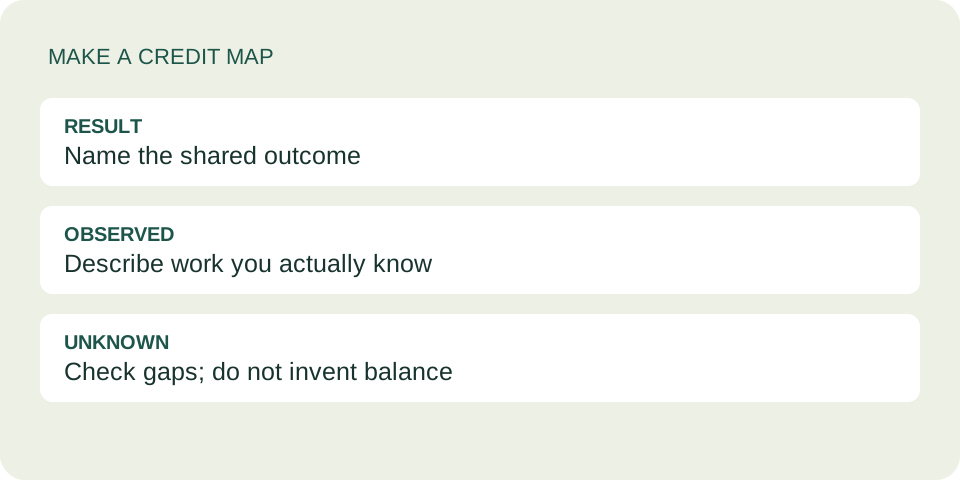
Make a credit map before writing
A finished project is visible; all the work behind it may not be. Spend a moment separating three kinds of information. This is a writing worksheet, not a scorecard for deciding who deserves most praise.
Shared result
What did the group actually complete? Name a concrete outcome everyone recognizes, such as putting together a display.
Observed work
What did you see each person do, or what did they tell you? Use specific actions rather than labels such as genius or best teammate.
Missing context
Whose work might you not have seen? Check before describing a list as complete. Do not invent a task to make the list look balanced.
If you cannot confidently name individual contributions, thank the group for the confirmed result. You can ask about the process in another conversation; the card does not have to be a definitive record of everyone's labor.
A fictional display-building exercise
Imagine that three friends built a small display. You watched River align the panels and Jo check the labels. You know Casey helped, but you were away during that part. These names and events are invented to demonstrate an editing choice.
“River carried the whole project. Jo and Casey helped too. We all agree you deserve this song.”
The draft turns incomplete observations into a ranking. It also claims a group opinion without showing that anyone approved it. Adding more enthusiastic adjectives would not fix either problem.
One honest group version could be:
“To the display crew: seeing the pieces come together was a lovely moment. I appreciated the care that went into making it ready. This track brings back the rhythm of our assembly afternoon. A thank-you from me, Rowan.”
This version deliberately does not pretend to summarize everyone's job. If the team wants named credit, check the missing information first. You could then write a short, verified list in parallel form: River aligned the panels; Jo checked the labels; Casey's contribution should be confirmed before you describe it. Never paste the placeholder into the final note.
A separate personal note to River can mention the panel alignment you witnessed. Being specific in that note does not require calling anyone else less important. Use your own real details and musical association; the exercise provides no real recording recommendation.
Choose who is speaking
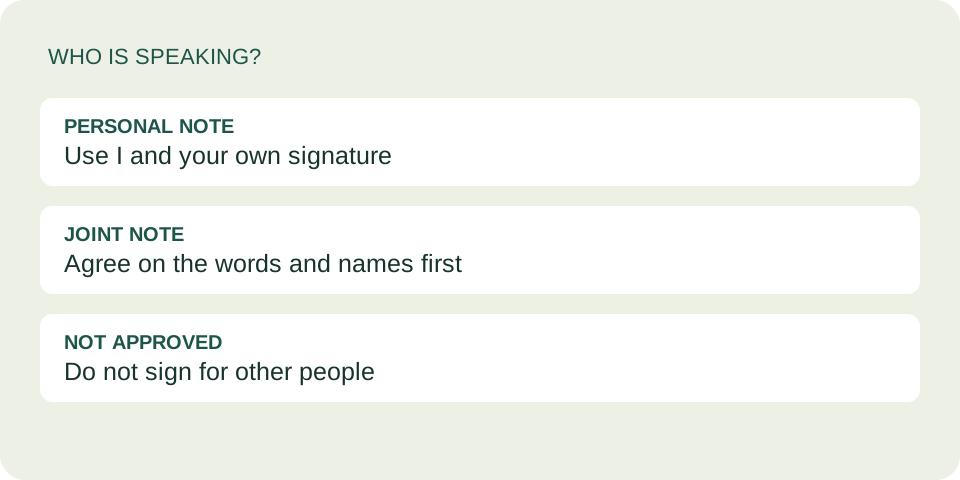
- Your own appreciation: write “I” and use your own name. Being a member of the team does not authorize you to speak for every member.
- A joint message: ask the named senders to review the actual words and signature. Agree on the version before creating the final link.
- An unresolved disagreement: do not make the song card settle it. Keep disputed credit out of a celebratory announcement and discuss it directly.
DedicationCard does not collect signatures, track approvals or provide a shared editing workflow. Its sender field is text, not proof of consent. Review the affectionate greeting and signature on the finished card too; that framing may not fit a professional team.
Match the music to a shared moment
Pick a recording associated with something the group actually experienced, or explain that the connection is yours. Do not call it “everyone's favorite” unless you know that. Read the whole song's meaning and avoid using a competitive or romantic message by accident.
One group card shows the same note to everyone. For individual thanks, use separate cards and check each recipient-link pairing. Anyone with a full card link can read it; names do not restrict access. Remove private project details before sharing, and send the link yourself.
Questions about group credit
Must every person get the same number of words?
No. Accuracy matters more than matching sentence lengths. A short collective thank-you is better than invented specifics.
Can I sign “from the team”?
Only when the people you represent agree. Otherwise use your own name, even if the whole group receives the card.
What if I notice an omission after sending?
Acknowledge it directly and correct the wording. A replacement card has a new link and does not change the old one; share the correction rather than assuming the first card disappears.
Can this replace formal project credits?
No. A friendly music note is not the project's official contribution record. Keep any required credits in their proper place.