TWO LANGUAGES, ONE CLEAR MESSAGE
Write a song dedication in two languages
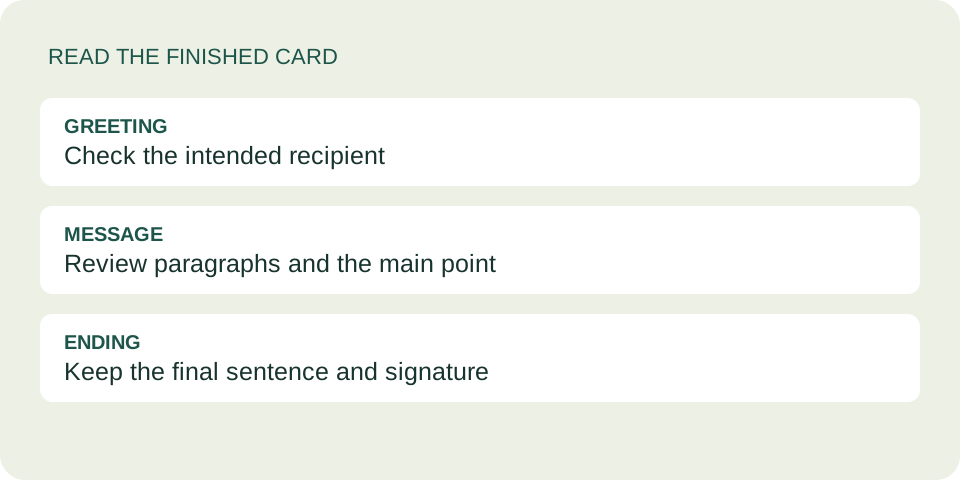
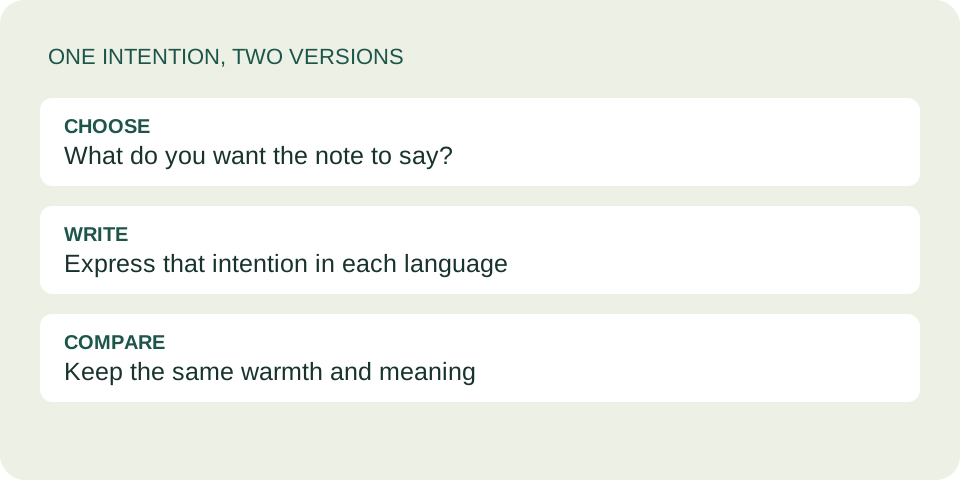
Write the same short intention in both languages, put each version on its own line, and keep the recipient's preferred name unchanged. Then reopen your completed card and read both versions. DedicationCard keeps the text you enter; it does not translate or check it for you.
Choose who each version helps
Start with the language the recipient reads most comfortably. Add another version when it has a purpose: perhaps it is your shared language, or it lets you express a familiar phrase and explain it. Two languages are optional. A short, clear message in one language is better than a second version you cannot confidently check.
Keep both versions aligned. If the first thanks someone for their help, the second should not accidentally add a romantic promise or a request to reply. Read them as two separate notes and ask whether each makes the same point.
Use paired lines instead of a crowded paragraph
This invented English-and-Spanish example shows the layout, not a message from a real user. It uses original words, not song lyrics. Adapt it to something true for you.
English
Thank you for helping me with the boxes. This song is for you.
Español
Gracias por ayudarme con las cajas. Esta canción es para ti.
Both versions name the same help and make the same dedication. Put a line break between them in the message field. Language labels are useful when they help the reader; they are not required. Do not add spaces to imitate two columns, because a phone has less room than a desktop.
For a longer note, shorten the original before translating it. Remove a repeated explanation rather than cutting off half of the second version. If you use a translation service, check names, tone and any idiom yourself or with someone who knows the language. Avoid sharing confidential text with a service you do not trust.
Keep names and musical references recognizable
Use the spelling the person uses for their name, including accents. Do not translate a name simply to match the language of the sentence. If you want to add a familiar nickname, make sure the recipient recognizes it.
Keep the recording's title and artist recognizable as they appear on its music service. Explain in your own words why you chose it rather than translating its lyrics. Your note can bridge the language difference without claiming that every lyric has the same meaning in translation.
Check the saved card
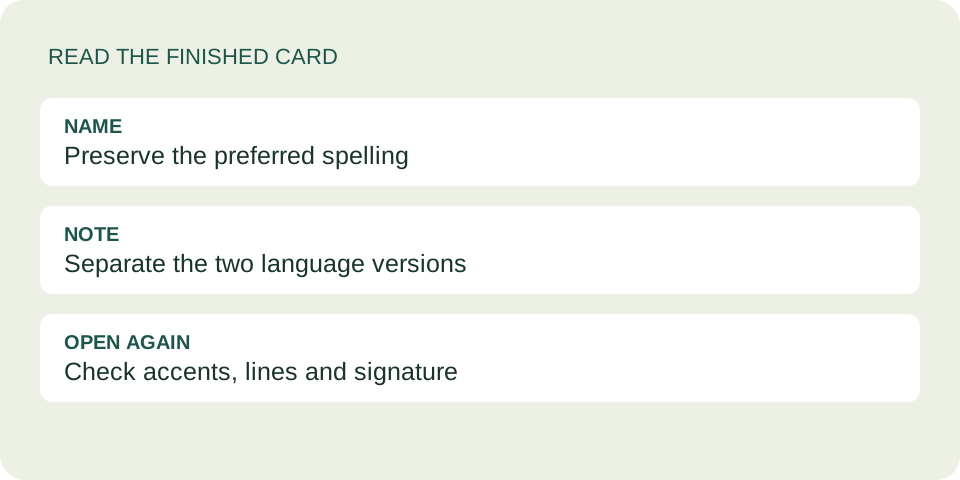
- Read each language version independently. Check that neither adds an unintended promise or request.
- Create the card and copy its complete dedication link.
- Open that copied link in a new tab. Compare the name, signature, accents and paragraph breaks with your draft.
- Read it on a narrow screen. Keep the layout simple if the two versions feel crowded.
In our October 14, 2026 browser check, a synthetic card retained accented Latin letters, a Greek name, one musical emoji and line breaks after copying and reopening its link. This is a specific test, not a guarantee for every script, font or device. Check your own finished card, especially when mixing text directions.
For copying problems, see the complete-link guide. If you revise the wording after sharing, you need a replacement dedication link.
Questions about bilingual notes
Will the site translate my message?
No. You supply both versions. The tool neither translates them nor verifies that their meanings match.
Can I use emoji instead of the second version?
An emoji can add a small detail, but it does not explain a sentence reliably. Keep the main intention in readable words.
Does a second language make a card private?
No. Anyone with the full link can read the card. Using another language is not access control.
Must both versions be word-for-word translations?
No. Aim for the same intention and level of warmth in natural language. If a joke or idiom does not carry across, use a simpler sentence in both versions.
Give each thought room