WHEN SOMEONE SENDS YOU MUSIC
Reply to a song dedication without pretending you listened
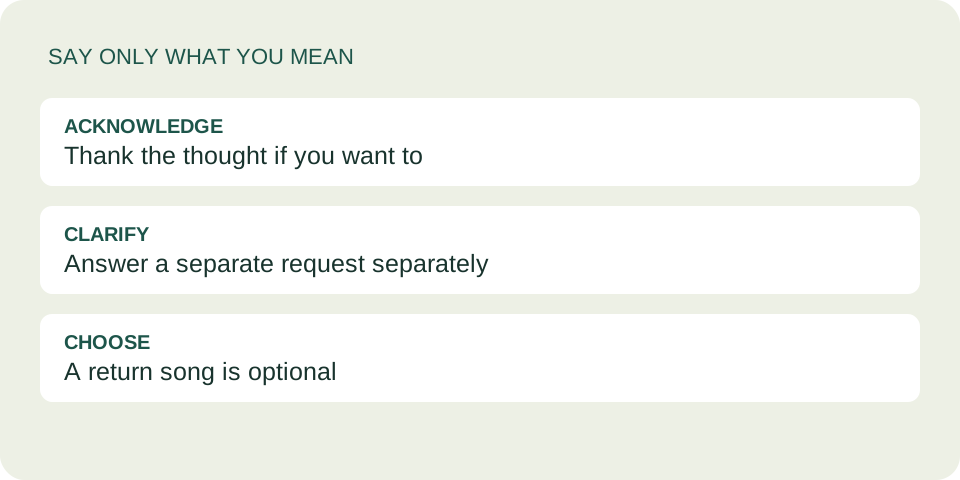
You can acknowledge the thought without claiming you played the song or share every feeling it suggests. Say what is true: you received the note, you have or have not listened, and what you want to communicate. You do not owe a review, a matching song or an immediate response.
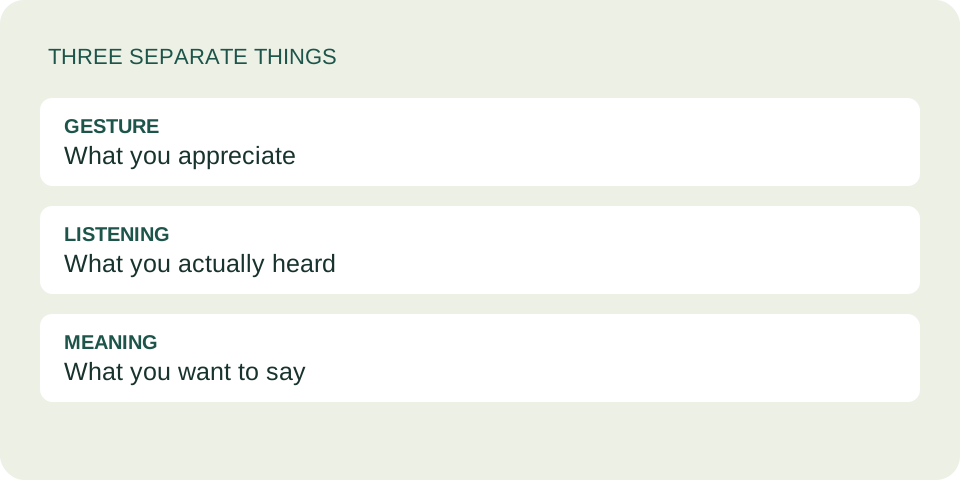
Separate three things before writing
A short reply can accidentally say more than you mean. Treat the gesture, your listening and your response to the person as separate decisions. The examples here are invented writing exercises, not messages from readers.
Choose a reply that matches what happened
You read the message but have not played the song
“I saw your note about the afternoon at the pottery table. Thank you for remembering it. I have not listened to the track yet.”
This fictional reply acknowledges a detail in the note without inventing a musical reaction. Do not add “I will listen tonight” unless that is a commitment you want to make. It is fine to leave the timing open.
You listened, but it is not your usual taste
“I listened. The memory you wrote about meant more to me than the track itself, and I appreciated hearing from you.”
Use this only if it is true. You do not have to rank the song or pretend it is a new favorite. If the sender explicitly asked for musical feedback and you want to give it, describe your own preference rather than declaring that their taste is wrong.
You enjoyed one specific part
“I listened on my walk. The quieter ending was the part I wanted to hear again. Thanks for sharing it.”
This is an invented example, not a description of a particular recording. Replace it with a feature you genuinely noticed. One honest observation is enough; a dedication does not require a detailed review.
When the implied meaning does not match yours
If the note seems romantic but you understand the relationship as friendship, do not send a matching romantic track just to avoid an awkward sentence. You can respond to the person directly.
“Thank you for the thought. I want to be clear that I see our relationship as friendship.”
If you cannot tell what they meant and want clarification, ask about their intention rather than treating lyrics as evidence: “Were you sharing the sound, or was there something you wanted to say in the note?” You may also choose not to continue the conversation. These are options, not scripts that guarantee a comfortable reaction.
For an apology, acknowledging receipt does not require forgiveness or an immediate decision. For a request, answer that request separately if you choose. A song should not force several different decisions into one polite “thanks.”
Reply where the conversation already is
DedicationCard displays the note and provides sharing controls. It does not provide an inbox that delivers a reply to the sender. Respond through the chat or email where the link arrived if that is a welcome channel. Do not put a reply into a new card and assume the original sender will be notified.
Making your own song card is optional. If you choose to send one back, write a fresh note and deliver its complete link yourself. You can also reply in plain text. Avoid forwarding or posting the received card as a way of answering: its private context may involve another person, and anyone with the complete link can read it.
Questions after receiving a dedication
Do I have to send a song back?
No. A sentence, a later reply or no reply can be your choice. Do not choose music merely to match the effort.
Can I thank them before listening?
Yes. Thank them for the thought or the written note, and avoid describing a listening experience you have not had.
What if the song will not play?
You can say you read the note but could not open the recording. Ask for a title and artist if you want to find it, without claiming that the card itself failed.
Does opening the card send an acknowledgment?
This tool does not provide a read-receipt or reply feature. If you want to acknowledge it, send your own message through your existing conversation.