WORDS BEFORE MUSIC
Send a song with an apology, without making it a request
Write the apology so it makes sense without playing anything: say what you did, name a practical repair you can offer, and leave the music optional. If someone has asked you not to contact them, do not send a song or use a card to reach them another way.
First decide whether a card fits
A polished card can feel more affectionate than the words you intended. In our October 17 tool check, a named card included the opening “Someone is thinking of you” and the signature prefix “With love”. Those are part of the presentation, not an assessment of your relationship. A direct message may be a better container for a practical apology.
Read the entire finished card, including its greeting and ending. If the warm framing would be unwelcome or confusing, do not try to cancel it out with a disclaimer buried in the note. Use an appropriate existing conversation instead, or leave the message unsent.
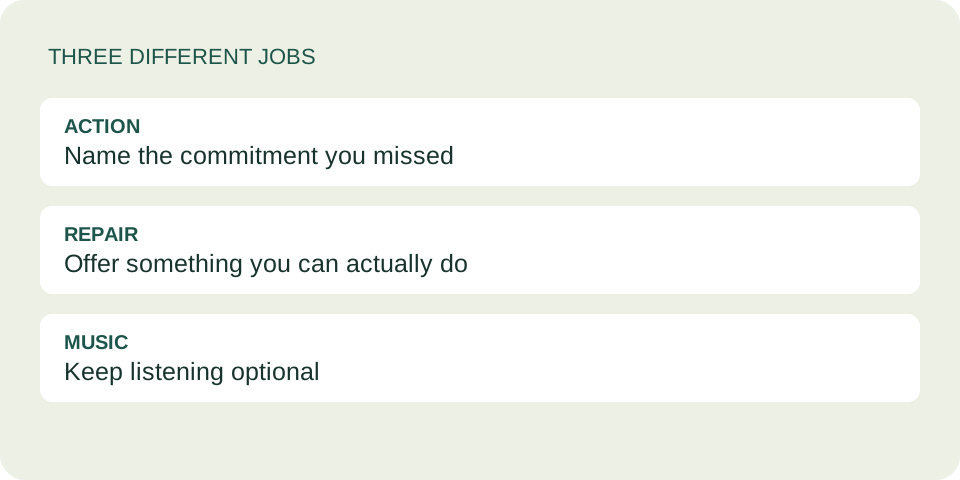
Separate three jobs in your draft
1. Own an action
Describe your own specific behavior. This gives the recipient something clearer than a vague statement about a difficult situation.
2. Offer a repair
Choose something you can actually do. State any arrangement as an offer when it affects their time, space or belongings. Do not promise a result that depends on their response.
3. Make the music extra
Explain the personal connection in your own words. The recording should not carry a hidden demand for reconciliation or do the work of naming your action.
An invented example: a missed pickup
This exercise is a fictional situation, not a message from a reader. Someone agreed to collect a borrowed bag but did not arrive or warn the owner.
“I had a terrible day. Play this and you will know how I feel. Can we please forget the whole thing?”
The first sentence explains the sender's experience without naming the missed commitment. The second asks the other person to do interpretive work. The last seeks a resolution before offering any repair.
A more specific draft could be:
“I did not come to collect the bag when we agreed, and I did not let you know. I am sorry I left you waiting. I can arrange a pickup at a time you choose, or pay for a courier if you prefer. I will wait for your preference before arranging anything.”
Only offer choices you can fulfill. If music would be welcome, add a separate sentence such as: “I also thought of the instrumental we listened to after the market. I can send its link another time if you would like it.” The apology is already complete if that sentence is removed. There is no need to attach music immediately.
Check the container as well as the words
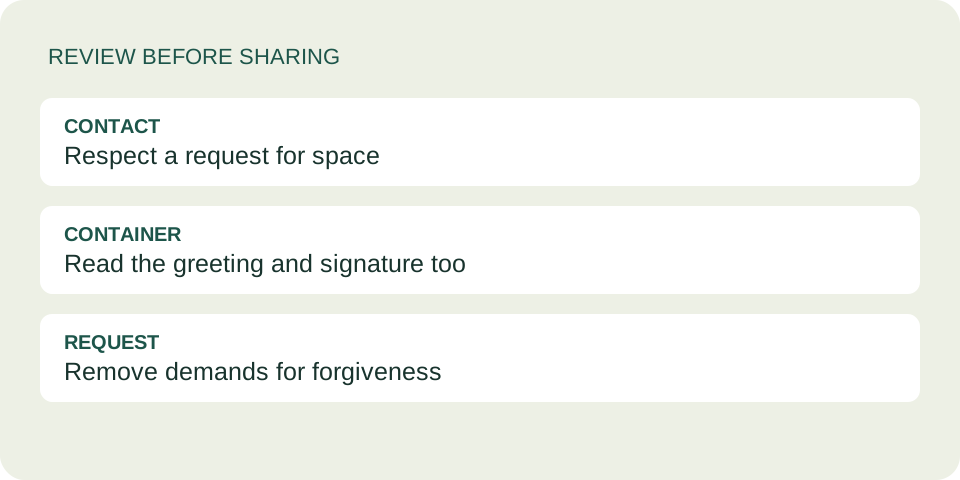
- Check that contact itself is welcome. A new account, anonymous signature or different channel does not override a request for space.
- If you use a card, read the automatically displayed opening and signature as part of the message.
- Read the note without the music. Does it still identify what you did and what you can change?
- Remove confidential details. Anyone who has the complete dedication link can read its contents.
- Open the copied card link yourself before sharing. Creating a card does not deliver it or tell you how the recipient feels.
Our synthetic test preserved the note across card creation, copying and reopening. The separate “Copy message + music link” button produced the note, recording link and a “From” line, without the card's affectionate opening. Inspect that copied text before sending it. This test checked formatting with a placeholder link; it did not test a real recording or delivery.
Questions to ask before sending
Should I use an anonymous card for an apology?
If the apology concerns your behavior, hiding who is responsible makes it harder to understand. Do not use anonymity to get around blocked or unwelcome contact.
What if the song's lyrics say it better?
Write the essential meaning yourself anyway. A listener may interpret the recording differently or be unable to play it. You do not need to quote lyrics to explain why a piece of music matters to you.
Should I send another card if there is no reply?
Silence is not an invitation to send a series. Respect any boundary already stated. An apology does not create an obligation to listen, forgive or answer.
Can I edit a card already shared?
Making a replacement card produces a new link; it does not rewrite a previous one. Review carefully before sharing, especially when the wording concerns another person's experience.